so in lieu of restarting this blog, I created a new one to get a fresh start. Its not gonna be all album dl's but so far thats all ive got. Expect press releases, videos, singles/ep dl's articles etc. check it:
Third-Hand Choonz and Such
Tuesday, November 24, 2009

Monday, December 22, 2008
Updates Coming
Sorry about the lack of posts lately. I'll be getting my shit together in the next week or two and updates should be somewhat regular again. Please email me or leave a comment if any of my links are dead, I'm sure some of them are.
Until I get on top of things again check out my friends blogs:
The Business of Words
Ironic Contrarian
Until I get on top of things again check out my friends blogs:
The Business of Words
Ironic Contrarian
Monday, November 10, 2008
Dert Floyd - Westside of the Moon (2008)

Dert is one of the freshest producers in LA and he works his magic yet again with a free beat tape release featuring 34 exclusive tracks showcasing samples from the Pink Floyd discography titled Dert Floyd - Westside of the Moon. (Evade the Noise)
Download
Friday, October 24, 2008
Four Tet - Rounds (2003) [Domino Records]

Free jazz drummer Milford Graves has a nice trick that he performs at his shows: He brings someone in the audience up on stage and asks them to feel for his heart rate. It starts out steady, but as the person holds both wrists, it slows, and Graves begins to diverge his bloodstream on either side of his body, finally achieving an internal polyrhythmic pulse between the two points. Then he jumps behind his kit and clatters away in ecstasy.
Four Tet's lone member, Kieran Hebden, is fascinated with the impossible rhythms that the free-form jazz greats could bang out as they pleased. Whether or not he's taking a page out of Milford Graves' book is debatable, but he opens "Hands" with a cardiac sample fibrillating into a multi-limbed percussive rattle of densely edited and seemingly random drum hit samples that just starts to stroke Barry Altschul's beard before locking down into a hip-hop groove. He fades the cymbals' sizzles into the pseudo-Clyde Stubblefield sticks of "She Moves She", a cycling song evenly spaced with wheeling rimshots, scattered gongs, and funky string plucks that veer around the car horns that bleat past.
"My Angel Rocks Back and Forth" gently blows iron-lung sighs through ride cymbals and dirty, run-out grooves while an austere piano twinkles, hinting at the sort of gentle sounds Hebden will soon weave around English folk legend Vashti Bunyan. Verging on the lugubrious is the nine-minute "Unspoken" (whose piano riff is lifted from, of all sources, Tori Amos' "Winter"), but Hebden's touch keeps it from morass. Here, he controls his ingredients-- fictitious soundbytes of early Gato Barbieri sax, a plaintive finger or two from McCoy Tyner, broken chimes, backwards feedback, and a DJ Shadow kickdrum-- keeping them at a contemplative simmer, rather than allowing them to come to a full boil.
"Chia" is a tabla-bubbling conduit to the mod bass and shimmying sitar of "As Serious as Your Life", namechecking the crucial free-jazz text by Val Wilmer, yet standing much closer to Miles Davis' On the Corner, with those odd-metered handclaps and that stuttering punch of a Jack DeJohnette hi-hat. With metallophone ripples at a wake, "And They All Look Broken Hearted" is an abstract and solemn affair, recalling the oddly melodic cadence of a player like Bobby Hutcherson, and with spliced drum solos swirling around some affected harpsichord and vibraphones like club smoke, Hebden captures the cool sadness of old Blue Note posters. It sounds like a shoo-in for the album's closing track, but it instead leads up to "Slow Jam", which has that long goodbye of the best melancholy closers, a circle game of echoing footsteps, fitful static, gleeful kazoos, lulling guitar repetitions, and shadows surely sinking in, revolving all disparate sounds to resolution.
Freely moving in and out of cycles, able to coalesce or evanesce in a heartbeat, straight up and down, or else banging about like a toddler on the pot shelf, Rounds funnels every element through the drum, which always remains at the forefront of the mix. But what gives this record its internal order, and allows it to stand out against previous laptop explorations of immense record collections, is the other genres Hebden dabbles in and draws upon to flesh out the beat. Though hardly obvious the first time through, there's the supple, propulsive fun of funk, as well as the pastoral placidity of folk, both moving over the cut-up rhythms like cumulous clouds, allowing hot light through at some junctures, but cooling things out with a darker umbrage in others. Rounds may not be "as serious as your life," as one track proclaims, but it does feel that pulse. (Pitchfork Media)
Download
Monday, October 20, 2008
Tobacco - Fucked Up Friends (2008) [Anticon]

On his first solo album, Tobacco explores a darker, starker, and altogether more badass dimension of his complex vision. With his group, Black Moth Super Rainbow, Tobacco distinguishes himself as a master of jagged beats, glowing melodies, and pronounced tension. This time, he works alone, in rural Pennsylvania, away from conventions and interference.
As always, Tobacco recorded Fucked Up Friends using analog synths and tape machines, which gives his work a timeless distance from digital pop music at large. His tracks evoke sonar, mellotrons, and deteriorating cassette tapes; his windshield-rattling beats thump hard against their technological limitations; his hooks emerge from thick ponds of distortion, which heightens their hypnotic power. Fucked Up Friends is equally cosmopolitan and self-contained, the soundtrack for an imaginary underwater cop show, a welcome stranger anywhere in time and space. (PR)
Download
Lone - Lemurian (2008) [Dealmaker]

lone (Matt Cutler) has something that I think is very healthy for an artist to have in this age of myspace music and the vast array of underground labels, and that's a strong identity - I could spot a Lone track by hearing one or two bars, he has a personality in his music that is vivid.
I reckon that Lemurian could provoke synaesthetic reactions in those who don't already have the condition, that is, its character seems to extend beyond the sonic domain into some other sensual domain.
I think that if Lemurian was a colour, it'd be aquamarine. If it had a smell, it'd be seaweed on the breeze. If it had a taste, it'd be saltwater. If it had a texture, it'd be scratchy coral. 'Sea Spray' is about as fitting a title as you could get for a Lemurian track.
As well as filling your ears with faded loungey chords, bursts of weathered VHS strings and Hawaiian musical postcards, Lemurian is caked with the thickest punchiest soulfully - shuffled hip hop beats that would satisfy anyone who simply has to nod their head to enjoy themselves.
This is also daydream music, you can't listen to it without going off somewhere. Personally, I slip into the daydream of being sucked into the 80s arcade game 'Outrun' and tearing around a looped pixellated parallel to Miami or some other palm-tree-avenued sea front, with Lemurian pumping out of the car stereo of course. (Bibio of Mush Records)
Download
(sorry for using a foreign download link, it may look sketchy but the link at the bottom is legit)
Wednesday, October 15, 2008
Jaga Jazzist - A Livingroom Hush (2001) [Ninja Tune]

If you need any further proof that Europe (and particularly Norway) is the place where all the interesting stuff is happening, look no further than this record. A Livingroom Hush is the debut from Norwegian collective Jaga Jazzist, now given a wider release by Ninja Tune.
The album's already picked up critical praise (even from the NME!) with one memorable quote describing it as 'Charlie Mingus with Aphex Twin up his arse'. Though this is an interesting (if unsavoury) notion, the album is far from the kind of confrontational experience it suggests. Jaga Jazzist bolt together elements of electronica, formal jazz writing and the wide open spaces of dub and post rock into a lush, listenable stew that's very much their own.
Unlike some of their contemporaries, there aren't any specific references to jazz tradition; you won't find any Alice Coltrane samples here. In fact they're as likely to remind you of Soft Machine or John Barry as much as Herbie Hancock. This pluralist approach is laid out on the opening "Animal Chin" as flute and vibes patterns swirl over lurching breakbeats and churning bass, and the luscious glide of "Going Down", where luminous horns carve out aching melodic lines.
Often the cool beauty of the brass arrangements is reminiscent of Gil Evans or Oliver Nelson, and the short, sweet solos of Lars Horntveth, Jorgen Munkeby and Mathias Eick offer the same mix of introspection and inquisitiveness that you might find on a late 60s Blue Note date.
Nothing stays still for very long; "Airborne" kicks off as spacey jazz ballad peppered with digital crackle n' pop before morphing into a slinky Hancockian bass clarinet riff, joined by intricate countermelodies from strings and horns as the tenor takes over. All in under 6 minutes. Elsewhere you get space age bachelor pad music ("Lithuania"), breakbeat cheesetronica mashup ("Midget") or queasy abstract ambience ("Cinematic").
Jaga Jazzist's grasp of dynamics and structure(whether achieved in real time or through digital cut-up) puts them apart from the usual jazztronica suspects. It's the mix of 21st century texture, intelligent jazz writing and improvisational concision that makes this one of the most enjoyable records of this (or any other) year. (BBC)
Jaga Jazzist - The Stix (2003) [Ninja Tune]

Although they’ve been a relative unknown on this side of the Atlantic, Norway’s Jaga Jazzist have spent the past ten years honing their deft blend of jazzy, melodic post-rock and thumping electronic programming. At times their music can conjure up the oft-maligned term “fusion," but Jaga’s alloy is stripped of all limp elements and replaced with an almost prog-inspired knack for quirky time signatures and quick shifts. The Stix, their second full-length, represents a further refinement of the efforts that first came to light on their debut A Livingroom Hush (reissued domestically by Ninja Tune). The melodies this time out are dizzier with more complex arrangements and effortlessly integrated electronics to boot. Whereas their debut at times felt like too much of a forced electro-acoustic pastiche, The Stix revels in smooth seams and graceful transitions.
The first few tracks on The Stix quickly cycle through all the things at which Jaga Jazzist excel. “Kitty Wú” opens things with a fine mix of heady, ascendant melodies that pass through horns and synths alike against a trade-off between rhythmic electronics and wily drumming. “Day” emphasizes pulsing beats, loping melodies and sky-high shoegazing synths, segueing nicely into the skittering drums, urgent harmonies, and over-the-top horn bleats of “Another Day”. “Suomi Finland” slows down and spaces things out a bit. This track relies less on sonic overload and temporal dexterity than its predecessors, initially allowing for keyboards to compete with vibes for the dominant melody, pausing for a brief interlude of guitars and flutes.
The remainder of the record finds the band spinning variations on their central themes. “Aerial Bright Dark Round” is more pensive and brooding than anything else here, with a neat contrast of grainy electronics and forlorn brass that eventually gives way to swelling synths. “Toxic Dart” again finds sputtering electronics squaring up against sax lines, thus setting the table for the full-band climax with electronic and acoustic drums clattering away against simple guitar refrains, while “I Could Have Killed Him in the Sauna” works the climactic interplay of the band to great, swirling effect.
The album becomes problematic at points when it seems as though the band’s main desire is overload – that is, piling layer upon layer of effect and instrumentation in an effort to make the listener swoon or perhaps demonstrate their own virtuosity. At times it’s blindingly effective, and at others it almost feels like overkill, as if the band could have easily worked with a few of ideas and explored those to more fulfilling conclusions. It almost feels as though, when listening to the album as a whole, that such a rush of shifting melodies and time signatures makes it distinctly difficult to retain anything. Admittedly, subtlety might not necessarily be Jaga Jazzist’s method of choice, but there still is something to be said for more understated approaches and textures.
In the end, though, any complaints leveled against The Stix are relatively minor. This is still exhilarating music that’s expertly composed and played. One would hope that in the future Jaga Jazzist will slow down and explore some of the neglected corners in the basement of their composition, or rely less on busy arrangements to convey a full effect. Whatever the case may be, while presenting no astounding leaps forward in terms of concept or composition, The Stix still survives as a great and meritous listen. Having achieved success in their homeland in both the critical and commercial aspects (this album debuted at No. 3 on the Norwegian pop charts), it would be nice to see Jaga Jazzist experience similar accolades in this country as well. (Dusted)
Download
Wednesday, October 8, 2008
Medeski Martin and Wood - End of the World Party (Just in Case) (2004) [Blue Note Records]

This new Medeski Martin and Wood release is heady stuff, certainly on par with the recordings that made the group something of an underground jazz legend in the early- to mid-nineties— Shack-man and Friday Afternoon in the Universe. But while End of the World Party (Just in Case) reminds you of those albums, and even more so the trio's Blue Note debut of 1998, Combustication , where they explored the possibilities of groove cum ambient sound, the compositions, the performances and the recording on the new disc are more pointed and purposeful in every way.
This production job by MMW and Dust Brother John King provides the most clarity and depth of any project the group has done. Billy Martin's kick drum echoes off your walls from the start in "Anonymous Skulls" and the mobile throb of Chris Wood's bass(es) underscores the rhythmic aspect of the music in an emphatic way the more atmospheric approach of The Dropper and Uninvisible did not allow. If you have any doubt he's one of the strongest bassists in contemporary jazz, listen to "Curtis," where Wood is the backbone of this band's sound.
If you've seen Medeski, Martin and Wood over the last few months, some of these tunes, such as "Shine It," may sound familiar. Party is the end result of group improvisations on stage and in the group's Brooklyn studios from which melodic motifs and polyrhythmic beats were sculpted into a dozen comparatively short tracks in the four to five minute range. The cumulative effect of listening to this album in its entirety is much the same as seeing the band live: the development of momentum is imperceptible, until you find yourself in the midst of the sharp funk of something like "Ice" and realize how much ground you and the threesome have covered in terms of textures and beats.
It's hard to say how much King contributed to the construction of the album as a whole—he's credited with "a little of this, a little of that"—but it's safe to say he kept the emphasis on rhythm. Some of the production touches, such as those on the title song, border on cute, but they end up being ephemeral blemishes that give way to more substantial themes such as John Medeski's use of electronic keyboards on "Reflector." As the billowing electric piano and acoustic bass waft through lightly exotic percussion on "Midnight Poppies/Exotic Birds," it also becomes clear how effectively MMW use space in a music that is otherwise as dense as any jazz on the planet.
Those who found their most recent recordings a bit too esoteric will rejoice in the syncopation that abounds throughout End of the World Party (Just in Case). And, again, anyone who's seen Medeski, Martin and Wood live in the past year will marvel at the mood and flow of this studio creation that certainly contains, apart from the physical presence of the band and an audience, all the best qualities of this trio on stage.(AllAboutJazz)
Download
Can - Tago Mago (1971) [United Artists]
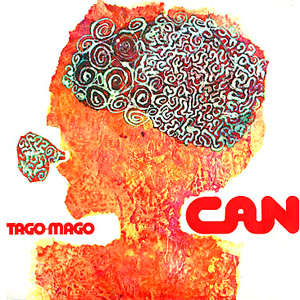
Tago Mago is the second studio album by the German experimental rock band Can, and was originally released as a double LP in 1971 by United Artists. It was the band's first studio album to feature Kenji "Damo" Suzuki after their previous vocalist, Malcolm Mooney, quit the band in 1970 due to a nervous breakdown. The album was remastered and released as a SACD in September 2004, and included commentary from former Melody Maker journalist David Stubbs and Bobby Gillespie of Primal Scream.
Tago Mago has been described as Can's most extreme record in terms of sound and structure.[1] The album has received much critical acclaim since its release and has been cited as an influence by various artists. There have been attempts by several artists to play cover versions of songs from Tago Mago. Remix versions of several tracks by various artists are included on the album Sacrilege. (Wikipedia.org)
Download
Thursday, October 2, 2008
Animal Collective Rarities and Bootlegs
Check out this dudes blog. He has compiled every AC recording you could want including B-Sides, unreleased songs, live recordings, new post-Strawberry Jam tracks, the Black Dice/AC split "Wastered", and a lot of other dank musical nugs.
Make sure to watch the video at the bottom of Avey, Panda, and Geologist live in Nashville 2003.
BRRRPTZZAP the Subject
Make sure to watch the video at the bottom of Avey, Panda, and Geologist live in Nashville 2003.
BRRRPTZZAP the Subject
Sunday, September 28, 2008
Brightblack Morning Light - Motion to Rejoin (2008) [Matador]

Naybob Shineywater pens mystic lyrics about rainbows, hologram buffaloes and living in a little tent down by the river — and he's got the hippie bona fides to back it up. With his partner, Rachael Hughes, Shineywater lives in a solar-powered home in New Mexico, where the pair typically craft psych-rock blues albums under the name Brightblack Morning Light. But on the duo's third record, they expand their sound with touches of Muscle Shoals-era soul. Cuts like "Hologram Buffalo" are accented with flutters of reedy saxophones, and the morphine-slow "Oppressions Each" features sensual backing vocals from soul vets Ann and Regina McCrary. Meanwhile, Shineywater sings about dropping out of society: "Always closer to the land," he croons, "and nobody wants oppression." His lyrics are still ridiculously New Age-y — "Keep the spirit clean and let the high times roll," he sings on "Past a Weatherbeaten Fencepost" — yet his airy vocals are so subsumed within sumptuous drones that it doesn't matter. At 50 minutes, Motion to Rejoin's jams drift off into the ether, but that's their whole charm: Surrender to the flow, and you'll never know where the time went. (Rolling Stone)
Download
Brightblack Morning Light (2006) [Matador]

Pitchfork gave it an 8.2:
The first few weeks I listened to Brightblack Morning Light, I was working on a longish project: It nestled into the background like one perfect, melancholic deep-woods quilt. Listening more closely, the lullabies keep showing new angles while getting livelier and livelier. That sort of compositional ruggedness is a treat: Brightblack Morning Light offers a clear-cut differentiation between run-of-the-mill indie-rock bar bands hiding out in folksy wardrobes and those doing something nuanced and complex. Hell, not even a song called "We Share Our Blanket With the Owl" could fuck up this shape-shifting slumber party. (PitchforkMedia)
Download
Thursday, September 25, 2008
Daedelus - Denies the Days Demise (2006) [Ninja Tune]
 Daedelus aka Alfred-Weisberg-Roberts returns to the fray with "Denies The Day's Demise," a new album of electro-tropicalia. The LA-based musician and producer always tries to do something thematic with every release and the contrast with his first Ninja Tune record could hardly be starker. If "Exquisite Corpse" was his hip-hop album, this is his techno record. There are no collaborations here, Daedelus choosing to strip right back to his own music and voice. In a further departure, this production focuses on the live elements of his previous recordings rather then his well-known sampling style. This is
Daedelus naked, so to speak.
So what is "Denies The Day's Demise" all about? On one hand it's a child's temper tantrum to stay up late, on the other hand it's a grand desire to save the world. "Day's Demise" starts with "At My Heels" a world roaming song, lyrically tongue-in-cheek. Then the riotous "Sundown" officially sets off to the Southern Hemisphere with a full Brazilian bloco band and a stadium rock audience. "Nouveau Nova" a driving, multi-layered exercise which sounds like Bach played on a Bontempi organ ends up as post-bossa, whereas "Viva Vida" sounds like carnivalé in halftime, all lament, and redemption. "Like Clockwork Springs" pulses unlike any previous Daedelus affair, while "Samba Legrand" exudes an easy, lilting charm. "Lights Out" proceeds as a freaked-out exercise in tempo-teased hiphop-isms. Then without any slackening of rhythmical power we reach "Bahia," wherein Daedelus' famous bass clarinet chops get an outing on a celebratory, beautifully broken track. Before the dawn there are tracks like "Patent Pending," nodding to another Alfred, Mr.Hitchcock, with its fluttering flutes and suspense. Then finally, the hyperkinetic loveliness of "Sunrise" gives way to the sheer morning brilliance of "Never None The Wiser", like awakening after a particularly heavy dream...
A thematic and musical tour de force which repays repeated listenings, Daedelus' "Denies The Day's Demise" is all about raging against the dying of the light, the romance of the night and the sheer arse-waggling marvellousness of latino rhythms. Don't dorm… (Ninja Tune)
Download
Tuesday, September 23, 2008
Prefuse 73 - Surrounded by Silence (2005) [Warp]

Scott Herren's (aka Prefuse 73) follow up to 'One Word Extuinguisher'. This album
includes appearances from Masta Killa, GZA, Ghostface, El-P, Beans, Pedro, Camu Tao, DJ Nobody, Kasu from Blonde Redhead, The Books, and Aesop Rock. Enjoy.
Sunday, September 21, 2008
Count Bass D - Robbed Without a Pistol (2008)
So after I posted links to both 'Dwight Spitz' and 'BEGBORROWSTEEL' today, Count Bass D himself emailed me requesting that I remove the links. Of course I did and the generous Count has offered this for us instead (from the email):
"I have an alternative for you.
Count Bass D - Robbed Without A Pistol (2008)
For more information:
http://countbassd.blogspot.com/2008/09/count-bass-d-robbed-without-pistol-2008.html
And the link for the project:
http://sharebee.com/e2509b5e
Thank you in advance!
--Count Bass D"
the above project is apparently a 30 minute instrumental release. Check it out and make sure to support his upcoming release, 'L7 (Mid-Life Crisis)' that is going to come out next month on 1320 Records.
"I have an alternative for you.
Count Bass D - Robbed Without A Pistol (2008)
For more information:
http://countbassd.blogspot.com/2008/09/count-bass-d-robbed-without-pistol-2008.html
And the link for the project:
http://sharebee.com/e2509b5e
Thank you in advance!
--Count Bass D"
the above project is apparently a 30 minute instrumental release. Check it out and make sure to support his upcoming release, 'L7 (Mid-Life Crisis)' that is going to come out next month on 1320 Records.
Prefuse 73 - One Word Extinguisher (2003) [Warp]
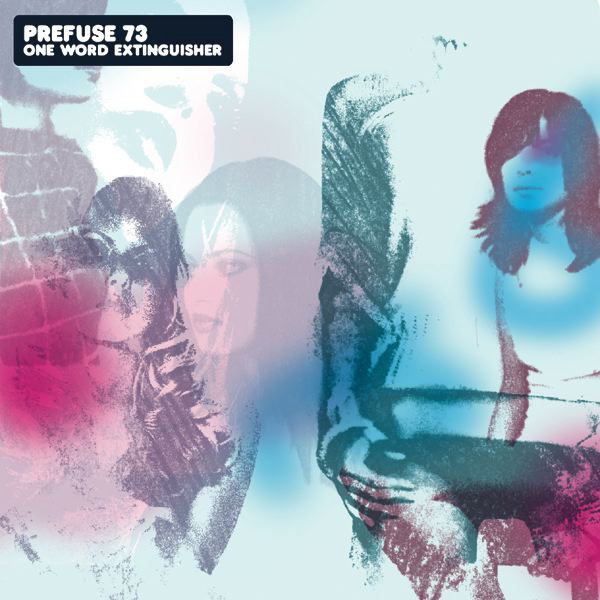
This is an album I'm really digging right now. Pitchfork gave it a 9.1:
Up to now, Scott Herren-- the shy, lanky Atlantan responsible for Prefuse 73's fabulous glitch-hop debut Vocal Studies + Uprock Narratives-- hasn't made his name as a purveyor of confessional music. The closest he ever came was the laptop catharsis of Delarosa and Asora, which had no secrets to tell; rather, its intricacies of meter and texture gave your head something to do while your guts spilled out over it. Vocal Studies + Uprock Narratives was hard-edged and fast-cutting, immersed in early rap techniques and sensibilities; it didn't express feelings, it steamrolled them. But One Word Extinguisher shows a range of emotional grappling usually foreign to instrumental hip-hop. It's clear that Herren was coming back to the studio night after night not just for skills and thrills, but for a measure of solace. Make no mistake: This is a breakup record.
"The never-ending battle" is what Herren calls the break-up that lasted for the year-plus during which this album was in production. "I locked myself in my room working, disconnected the phone, bummed out as fuck," he told CMJ in March. "You can't talk to anybody, you feel like shit, and it's the only thing you have to express yourself." A year of unspeakable suffering channeled into sixty ripe minutes: In the hands of anyone else, it could be torture. This sorrow, however, sparks with a sweeping wail of queasy ahhh's that carry stunted hopes for a soon-to-be-doomed relationship. Vocal scraps and a blood-curdling scream announce the descent of the mask of hip-hop rage, as an eightfold synth-scribbling bomb drops right into "The End of Biters", the first of several sucker-punching cutfests in the illustrious tradition of the edit record. Next comes Diverse's self-absorbed "Plastic", a screed that rails with righteous indignation against "pop trends and predetermined top-tens." All this over-the-top rebuke is obviously an escape from something.
Things begin to come into focus as "Uprock and Invigorate" bounces in with its edges exposed. Warm, fretless bass, flitting Rhodes, drizzling sawtooth, and a brittle snare become intent on stocking up and locking down with every passing bar. But beneath the surface lies a hint of tension between the percussive exoskeleton and its syrupy core, an orderly contest of soul-versus-machine that momentarily eclipses the sense of loss. The rest of the album projects this kind of tension into a giant battle of the sexes. "The Color of Tempo" mangles its feminine samples with a virile beatbox pattern; "90% of My Mind Is with You" breaks up heavy panting with a deliberately difficult, meter-defying beat, and ends with a series of mournful, defeated R&B samples. There can be no more doubt when, on "Female Demands", a girlfriendish voice casually tells Herren to "fuck with the beat here" only to be throttled by digital effects; the rest of the track feels like a giant damaged gynorcism. Before we know it, we're desperately trying to forget her, bumping with another woman who croons "you... you... you..." on the offs.
Meanwhile, straight meters are often sprinkled with triplet ligaments, propelling the beat with an uncommonly light touch. But Prefuse's rhythmic sophistication isn't just about alternating threes and fours-- as the lesson goes, it takes two interlocked meters to make African music. While Herren rarely tries to stand up in two meters at once, he often relies on the juxtaposition of mildly divergent rhythmic feels within the same beat, proving his mastery of some of the subtler tensions available to the instrumentalist. This gives him access to some very subtle tensions-- though many tracks seem like tricks to distract us from the ongoing devastation. Sooner or later, it sinks in that we're in the company of an emotional fugitive, sealed in a room with machines whose perfect control, he is convinced, will allow him to avoid the inevitable emotional reckoning. Through scorn and bombast, through distraction and self-parody, through the sheer weight of craft, this Prefuse tries to wear his sorrow down, to crush himself, to explode the emptiness. A thrilling listen, but how could such a mission succeed?
I'm not sure how he did it. There's a glimmer of hope in the open restraint of "Choking You", a sawtooth shuffle scattered with chirpy, chalky bits. Another late track calls a gender truce, as a skeletal crunch frames some lightly doctored female vocals, giving a cold, sweet impression, like melon rinds left out in the rain. And the last track, in spite of its metric and sexual duplicity, offers a baffling promise of balance. Unexpectedly, the music becomes its own consolation. (PitchforkMedia)
Download Part 1
Download Part 2
Count Bass D - BEGBORROWSTEEL (2005) [Ramp]

Begborrowsteel is a little too disjointed to be genius itself, but it might be the work of a genius just playing around in the studio. Sixteen “songs,” often spanning less than a minute, fly by seemingly too short to stick, but somehow do; this is more a concentrated album than an EP, even when the songs are more incomplete than short. And it all probably amounts to the best work of Count Bass D’s career so far.
The oddball D, who released one of the first hip hop albums in which the emcee played every instrument involved (Pre-Life Crisis), has converted himself to a true loop digger, constructing several songs from nothing but beats, obscure radio interviews (“Nina & Weldon” uses one of Nina Simone’s) or old movies (“Bullets Hit Brains”). The combination of amazing samples and odd-subjected raps like tooth decay and Zoloft (“Drug Abusage”) and group sex (“The Mingus Sextet”) make for unusual little songs. Even those not sold on the odd flow of the Count can admit he has developed into an excellent producer, “to old beats indebted” but nevertheless strikingly original.
On the only song that fits anything like a single format, “Down Easy,” D is singing, not well, but convincingly. “Low Batteries,” on the other hand, just starts out sounding like a somewhat normal rap song until, like an old Walkman, it starts to slow down and the raps start turning scary: “Count is drinking / I will not take baths, still stinking…Fuck every last one of y’all….I’m 30 years old…” It sounds even better on the record than it does conceptually.
The quick flow of subjects and tracks slows towards the end, but while Begborrowsteel is in its comfort zone, it’s a surprisingly hooky record for something this strangely structured. It is possible that Count Bass D has done us all a favor by removing the hook, most of the lyrics, and sometimes even the context from the hip hop song, giving us the first-ever non-skit 58-second rap song. Or it is possible that this is just a strange preemptive strike from a talent we’ll see more of in 2005. (Dusted Magazine)
Link removed by request of copyright holder
Count Bass D - Dwight Spitz (2002) [High Times]

"Freedom" is sort of a heavy word to attach to a disc or a rapper, but it's clear that's what Dwight Spitz is all about. Locked in a room with only an Akai S-3000 sampler and an MPC-2000 drum machine to keep him company, beat-maker and rapper Count Bass D emerged with a fistful of assorted tracks as tight and unpredictable as anything on the market.
Like Blazing Arrow, the latest disc by Blackalicious, Dwight Spitz crackles with an artistic spark rarely felt within the confines of mainstream hip-hop. Lyrics hit the listener from all angles; Count Bass D's cliché-free rhymes make it impossible to guess what comes next.
But unlike Blazing Arrow's relentless surge of optimism, Dwight Spitz is all over the place. The disc runs from the cool of "August 25, 2001," to the wicked smooth of "Antemeridian," to the gorgeously jazzy "Jussa Player," probably the only hip-hop track in current circulation to begin with the Compaq computer boot-up sound.
Count Bass D goes for variety and impact; his brief, tight tracks often take a single sample, hammer it repeatedly, and drop neat sets of clear rhymes atop funky jazz loops and keyboard progressions that build low-tech Casio soundscapes. The result is a mosaic of sound that acts like musical caffeine; the shifts are sometimes stark, and the contrast keeps a listener awake and bobbing to the beats. It's throwback, and it's radical, echoing the stripped-down expertise that marked Beastie Boys spinoff BS2000.
A rapper who'll name Desmond Tutu or Timothy McVeigh as soon as he'll drop the Fat Boys or Mos Def, Count Bass D embroiders his streamlined melodies and samples with verbally agile rhymes that entertain and dazzle. Spoken out, Count Bass D's lyrics are cold and delicious. But even on paper, they pack weight, like this passage from "Dwight Spitz":
I got a plan like Built to Spill/
Do a US tour for nine months and then I chill/
First name Dwight/
Middle name is Conroy/
I used to truck more jewels than a convoy/
That dream is over I be broke and never sober/
I want two Neve EQs, not a Range Rover
Dwight Spitz defies categorization. It's not a smooth blast of polished radio fodder, or an in-your-face assault on societal wrongs; it's just an artist and his friends making songs. And that's a relief.
A sample on Dwight Spitz declares: "Real music's gonna last. All that other bullshit is here today, and gone tomorrow."
Tomorrow, Count Bass D will still be around. (Flak Magazine)
Subscribe to:
Posts (Atom)


